



What Is an IRS Notice? Common Causes, Types, Response Tips
Opening your mailbox to find a letter from the IRS can make your stomach drop. But understanding what is an IRS notice, and why you received one, is the first step toward resolving it without panic or costly mistakes.
An IRS notice is an official letter sent by the Internal Revenue Service to inform you about a specific issue with your tax account. It could be something as simple as a change to your refund amount or as serious as an unpaid tax balance or a request for additional documentation. Millions of these notices go out every year, and getting one doesn't automatically mean you're in trouble.
In this guide, we break down the most common reasons the IRS sends notices, the different types you might encounter, and exactly how to respond. At TaxesToday, our CTEC-certified and IRS-registered tax professionals help individuals, families, freelancers, and small business owners deal with IRS notices and stay compliant, so if you need hands-on support, we're here to help you through it.
What an IRS notice is and what it is not
An IRS notice is a formal written communication from the Internal Revenue Service sent to your mailing address on file. Each notice addresses a specific issue with your tax account, such as a balance due, a change to your return, or a request for more information. Understanding what is an IRS notice starts with recognizing that these letters are highly specific: each one refers to a particular tax year and a particular action the IRS wants you to take or is informing you about.
Every IRS notice includes a notice number, usually printed in the upper right corner, and a toll-free phone number, both of which are your starting points for understanding exactly what the IRS needs from you.
What a notice actually is
Every IRS notice follows a standard format that includes your name and address, your taxpayer identification number, the tax year in question, and a clear explanation of why the IRS is contacting you. The notice also includes a deadline if action is required on your part. Common topics covered include adjustments to your refund, confirmations of payments received, requests for documentation, and notifications of penalties or interest.
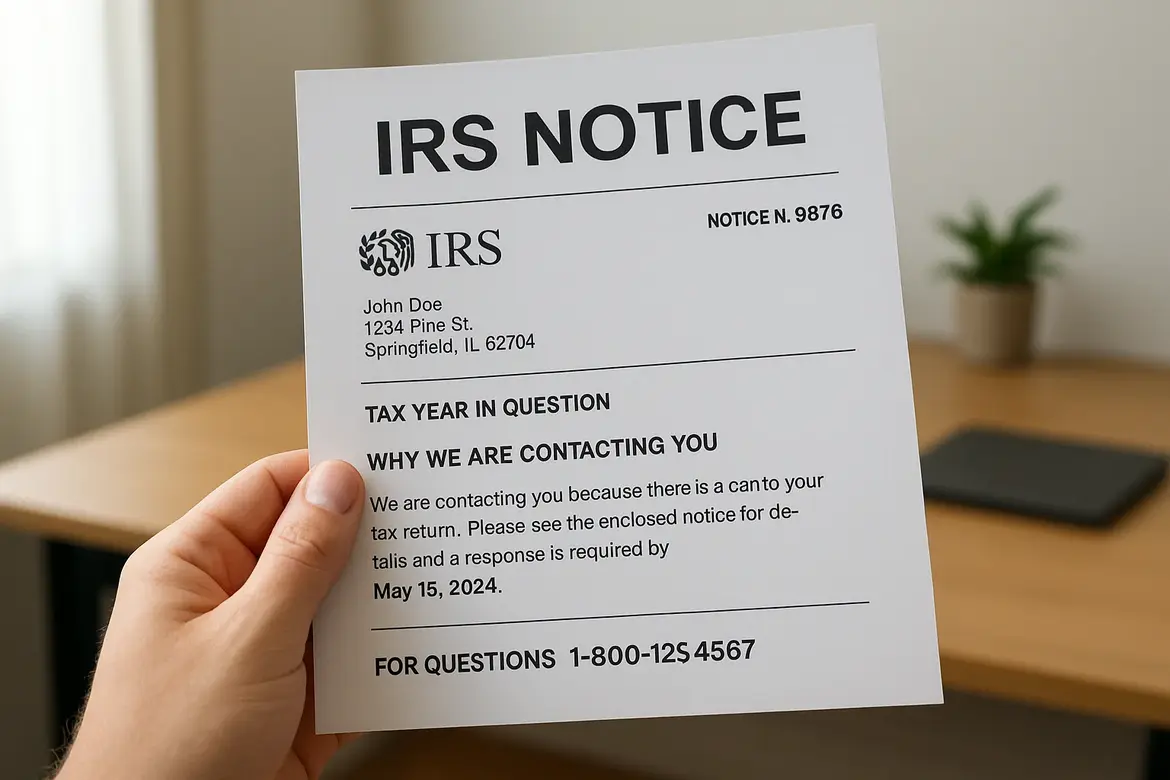
Notices are sent by first-class mail and sometimes certified mail when the matter is more urgent, such as a final notice before a levy. The IRS does not initiate contact by email, text message, or social media, so any digital message claiming to be from the IRS should be treated as a scam, not a genuine notice.
What a notice is not
A notice is not an audit by default. Many people assume that any letter from the IRS means their return is being examined in full, but that is rarely the case. Most notices are routine adjustments or informational updates that require a simple response, or no response at all if you agree with the IRS's finding.
Receiving a notice is also not the same as receiving a final demand. The IRS typically sends a series of letters before escalating to collection actions, giving you multiple opportunities to respond and resolve the issue. Ignoring a notice is the single biggest mistake you can make, because unaddressed letters lead to additional penalties, growing interest, and in some cases, enforced collection actions like liens or levies.
Why the IRS sends notices
The IRS sends millions of notices each year for a wide range of reasons, and most of them don't indicate serious trouble. Understanding why you received one is central to understanding what is an IRS notice and what it means for your tax situation. The IRS uses notices as its primary communication tool to alert taxpayers about changes, discrepancies, or required actions tied to their accounts.
Errors, adjustments, and missing information
One of the most common reasons the IRS contacts you is that it found a discrepancy between your return and information it already has on file, such as W-2s or 1099s reported by your employer or clients. The IRS also sends notices when it makes a math correction to your return, which may increase or decrease your refund or balance due. In these cases, the notice explains the change and tells you whether you owe more, get more back, or simply need to confirm the update.
If the IRS corrects your return and you disagree with the adjustment, you have the right to respond and provide documentation to support your original figures.
Balances, payments, and compliance issues
Unpaid tax balances trigger some of the most urgent notices the IRS sends. When a payment goes missing, gets applied to the wrong year, or never arrives at all, the IRS will contact you to resolve it. Filing late, claiming certain credits, or omitting required forms can also prompt a notice. These situations don't automatically mean an audit is coming, but they do require your attention and, in most cases, a timely response to prevent additional penalties and growing interest charges.
Common IRS notice types and what they mean
Understanding what is an IRS notice is easier when you can match the letter you received to a specific category. The IRS uses a notice numbering system where each code signals the general topic and urgency level. You'll find this number in the upper right corner of the letter, and it tells you immediately what the IRS is addressing and what kind of response, if any, you need to provide.
Notices about your refund or return adjustments
The CP11 and CP12 notices are among the most frequently issued. The IRS sends a CP11 when it corrects your return and now says you owe more than you originally calculated. A CP12 goes out when the correction works in your favor and increases your refund. Neither notice means your return is under a full examination. The CP2000 notice is a step further: the IRS uses it when income reported by a third party, like an employer or bank, doesn't match what you reported on your return.
If you receive a CP2000, you are not automatically assessed more tax. The notice proposes a change, and you have the right to agree, disagree, or partially disagree in writing.
Notices about balances owed or collection actions
The CP14 is the IRS's first formal notice of a balance due, and it's the starting point for the IRS's collection process. If you don't respond, the IRS follows up with a CP501 and then a CP503. A CP504 carries more urgency because it notifies you that the IRS may levy your state tax refund. The LT11 or Letter 1058 is the final notice before the IRS pursues a levy on wages or bank accounts, so treating it as high priority is essential.
How to respond to an IRS notice step by step
Knowing what is an IRS notice is only half the battle. How you respond matters just as much, and responding correctly within the right timeframe is what keeps a manageable situation from becoming a serious one. The IRS always includes a response deadline and a specific action it wants you to take, so your first job is to read the notice from start to finish before picking up the phone or writing a check.

Read and verify before you act
Pull out your original tax return for the year the notice references and compare it against what the IRS claims. Check the math, review the income figures, and confirm that any reported discrepancy is real. If the IRS is right, responding with payment or acknowledgment is straightforward. If the IRS is wrong, you need to gather supporting documents such as W-2s, 1099s, bank statements, or receipts before you write back.
Never ignore a notice, even if you believe the IRS made the error. A non-response is treated as agreement with the IRS's position.
Respond in writing and keep records
Send your response by certified mail with return receipt so you have proof it was delivered. Include a copy of the original notice, a clear written explanation of your position, and all supporting documentation. Keep copies of everything you send. If the notice includes a toll-free phone number, calling first can help you clarify what documentation the IRS actually needs before you mail anything. Log the date, time, and name of the representative you speak with every time you call.
How to spot scams and verify a real notice
Understanding what is an IRS notice also means knowing what it is not. Scammers frequently impersonate the IRS through fake letters, emails, and phone calls, and some of these attempts look convincing enough to fool people who aren't sure what a legitimate notice looks like. Knowing the difference protects you from paying money you don't owe or handing over sensitive personal information to criminals.
Red flags that signal a fake notice
Fraudulent IRS communications share a set of common warning signs that you can learn to recognize. Fake notices often demand immediate payment by unusual methods such as gift cards, wire transfers, or cryptocurrency. Real IRS notices never request payment through these channels. Scam letters may also threaten immediate arrest, deportation, or license suspension, none of which the IRS does through a first notice. Poor grammar, missing notice numbers, and vague references to your "tax account" without specifying a tax year are additional signals that something is wrong.
The IRS will never contact you by email, text message, or social media to demand payment or personal information.
How to verify a real IRS notice
Every legitimate IRS notice carries a notice number in the upper right corner, along with the specific tax year it addresses and a toll-free IRS phone number. You can verify any notice by calling the IRS directly at 1-800-829-1040, using the number from the IRS website rather than the one printed on a letter you're unsure about. You can also log into your account at IRS.gov to check your official correspondence history and confirm whether the IRS actually sent you a notice before taking any action.

If you need help with an IRS notice
Now that you know what is an IRS notice and how to handle one, you also know that some situations are better handled with professional support. If you received a CP2000, a balance due notice, or a final levy warning, the stakes are high enough that getting expert guidance protects you from making the wrong move at the wrong time.
At TaxesToday, our CTEC-certified and IRS-registered tax professionals review your notice, compare it against your original return, and help you build a clear, documented response. Whether you need help understanding what the IRS is asking, correcting an error on a prior-year return, or negotiating a resolution, we handle the details so you can stop worrying. Our services are affordable and available both virtually and in person across California and nationwide. Reach out to our tax professionals at TaxesToday and get the help you need today.